


Sharp budget cuts to the education and sports sector risk derailing key government commitments, including preparations for the Africa Cup of Nations (AFCON) and the planned enhancement of teachers’ salaries, the Ministry of Education and Sports has warned.
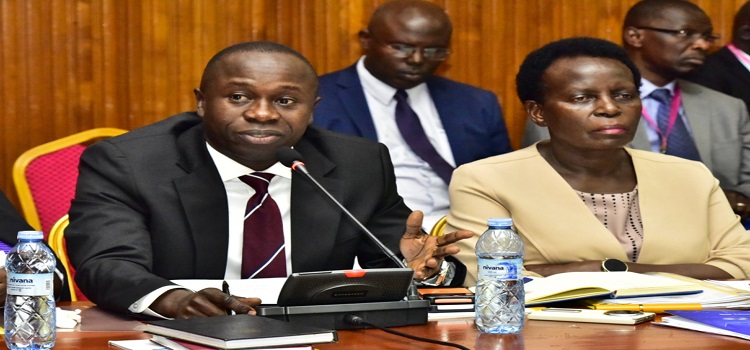
Appearing before the House Committee on Education on Wednesday, State Minister for Education and Sports (Sports) Peter Ogwang said the Human Capital Development Programme has been allocated an indicative budget of about Shs9.6 trillion for the 2026/2027 financial year, down from about Shs11.5 trillion in the current year.
“This represents a reduction of about Shs1.9 trillion from the current financial year,” Ogwang said.
He attributed the cuts mainly to a sharp decline in external financing and reduced domestic funding, noting that external support is projected to drop by about Shs1.7 trillion, while domestic financing will reduce by about Shs191 billion.
Ogwang told the committee that the Education and Sports Sub-Programme has been allocated about Shs5.35 trillion, compared to about Shs5.56 trillion in the current financial year, a reduction of about Shs209 billion.
“For financial year 2026/2027, the Ministry’s budget is projected at about Shs801 billion, reflecting a reduction of about Shs28 billion from the current budget of about Shs829 billion,” he said.
He further explained that the non-wage recurrent budget has fallen by about Shs7.7 billion, the government development budget by about Shs2 billion, while external financing is expected to decline by about Shs18.1 billion.
“As you may have noted, the current indicative budget does not provide for key commitments such as the enhancement of teachers’ salaries, preparatory activities for the Africa Cup of Nations (AFCON), and the roll-out of free and compulsory Universal Primary Education,” Ogwang said.
He added that the Ministry remains hopeful that the funding gaps will be addressed in the Second Budget Call Circular expected on February 15, 2026.
Permanent Secretary Kedrace Turyagyenda warned that the funding shortfalls threaten progress under the National Development Plan IV, now entering its second year of implementation.
“Without addressing these gaps, gains in access, quality, equity, and skills development will be difficult to sustain, and the national human capital agenda will be adversely affected,” Turyagyenda said.
She told MPs that despite fiscal pressures, the Ministry registered notable outputs in the 2024/2025 financial year, including supporting over 8.5 million learners through Universal Primary Education grants, completing and operationalising 50 seed secondary schools, advancing Technical and Vocational Education and Training reforms through enactment of the TVET Act, and upgrading sports infrastructure such as Mandela National Stadium and Hoima Stadium.
During the meeting, Members of Parliament from Karamoja raised concerns over inadequate funding for the Karamoja Peace and Technology University (KAPATU).
Hon. Noman Ochero (NRM, Labwor County) said only Shs10 billion of the Shs30 billion earmarked for the university had been provided.
“This University was tailor made to help the youths who engage in cattle rustling among others. If the University is supported, it will help community, and the neighbouring community,” Ochero said.
Hon. Irene Linda (NRM, Fort Portal City Woman Representative) questioned why government continues to launch new projects before fully funding existing ones.
The committee adjourned the meeting to allow the Federation of Uganda Football Association (FUFA), the National Council for Sports (NCS), and the Ministry to reconcile their positions on AFCON preparation requirements.