


The landscape of higher education is in a constant state of evolution, driven by technological advancements and the ever-changing needs of students and the workforce.
Among the most promising and potentially transformative technologies are the Metaverse and Virtual Reality (VR). While the concepts may still be perceived as futuristic, their practical applications in university education are rapidly becoming a reality, offering the potential to revolutionize learning experiences, democratize access to resources, and foster a more collaborative and engaging educational environment.
This article will explore the potential of the Metaverse and VR in university education, focusing on immersive learning experiences, virtual labs, and remote collaboration opportunities.
Understanding the Metaverse and Virtual Reality

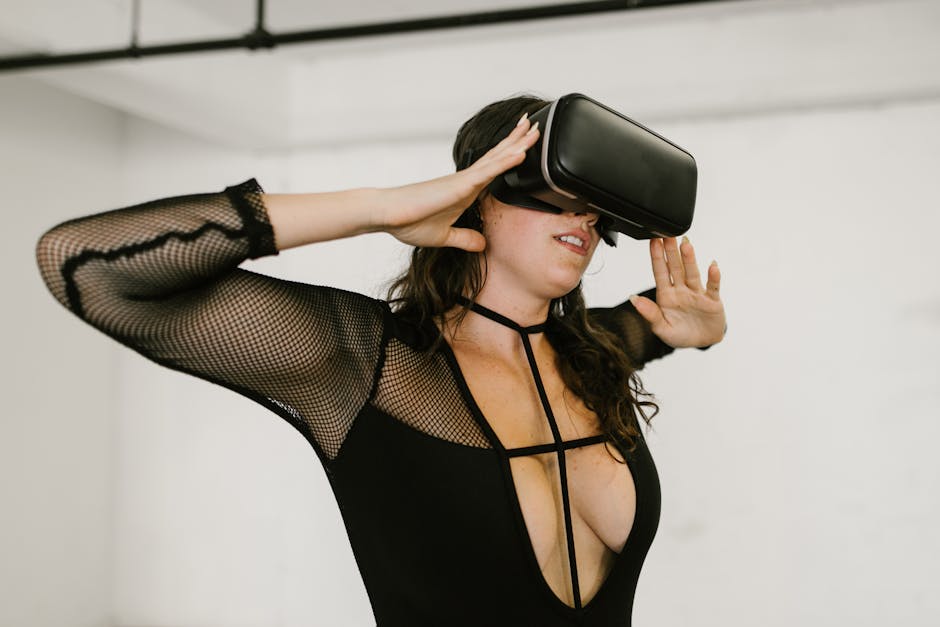
Before delving into the applications, it’s crucial to define the core concepts. While the term “Metaverse” is still evolving, it generally refers to a persistent, shared, and immersive virtual environment accessible through various devices, including VR headsets, augmented reality (AR) glasses, and traditional computers. It aims to create a seamless blend of the physical and digital worlds, allowing users to interact with each other and digital objects in a realistic and engaging manner.
Virtual Reality, on the other hand, is a more specific technology that creates a simulated environment that users can interact with through specialized hardware, primarily VR headsets. This technology allows for complete immersion in the virtual world, blocking out the real world and replacing it with a computer-generated experience.
While distinct, the Metaverse and VR are intertwined. VR can be considered a key access point to the Metaverse, providing the most immersive and engaging experience. However, the Metaverse extends beyond VR, encompassing AR and other digital platforms, creating a broader ecosystem for interaction and collaboration.
Immersive Learning Experiences: Engaging Students in New Ways


One of the most significant promises of the Metaverse and VR in education lies in their ability to create immersive learning experiences. Traditional lecture-based learning can often be passive, leading to decreased engagement and retention. VR and the Metaverse offer a dynamic alternative, allowing students to actively participate in their learning journey.
- Historical Recreations: Imagine history students stepping back in time to ancient Rome, walking through the Colosseum, and witnessing historical events firsthand. VR can transport students to different eras and locations, making history come alive and fostering a deeper understanding of the past.
- Scientific Explorations: In science education, VR can allow students to explore complex structures like the human cell or the solar system from a first-person perspective. They can manipulate molecules, dissect virtual organisms, and conduct experiments in a safe and controlled environment.
- Cultural Immersion: For language learners, the Metaverse can provide opportunities to practice their language skills in simulated real-world scenarios. Students can interact with virtual characters, order food in a virtual restaurant, or navigate a virtual city, enhancing their fluency and cultural understanding.
- Experiential Learning: Subjects like architecture and engineering can benefit greatly from VR. Students can design and build virtual structures, test their designs in simulated environments, and experience the impact of their choices in real-time. This hands-on approach fosters critical thinking and problem-solving skills.
The key advantage of immersive learning is its ability to enhance engagement and retention. By actively participating in the learning process, students are more likely to remember and understand the concepts being taught. Furthermore, VR can cater to different learning styles, providing visual, auditory, and kinesthetic experiences that appeal to a wider range of students.
Virtual Labs: Democratizing Access to Resources and Enhancing Safety
Access to well-equipped laboratories can be a significant barrier for many universities, particularly those in developing countries or with limited funding. Virtual labs offer a cost-effective and scalable solution, providing students with access to advanced equipment and experiments regardless of their location or institutional resources.

- Chemistry and Biology Simulations: Students can conduct complex chemical reactions or dissect virtual organisms without the risk of handling hazardous materials or damaging expensive equipment. VR simulations can accurately replicate the processes and results of real-world experiments, providing a safe and effective learning environment.
- Engineering and Physics Experiments: Virtual labs can allow students to test the laws of physics, design and build virtual circuits, or simulate complex engineering systems. They can manipulate variables, observe the results, and gain a deeper understanding of the underlying principles without the need for physical prototypes.
- Medical Simulations: Medical students can practice surgical procedures, diagnose virtual patients, and respond to medical emergencies in a realistic and risk-free environment. VR simulations can provide valuable experience in critical decision-making and improve patient outcomes.
Virtual labs not only democratize access to resources but also enhance safety. Students can experiment with potentially dangerous materials or procedures without the risk of injury or damage to equipment. This allows for more exploratory learning and encourages students to take risks and learn from their mistakes in a safe and controlled environment. Furthermore, virtual labs can be accessed remotely, providing students with the flexibility to learn at their own pace and on their own schedule.
Remote Collaboration: Fostering Global Connections and Teamwork
The Metaverse and VR can also facilitate remote collaboration, connecting students and faculty from around the world in a shared virtual learning environment. This opens up new opportunities for global collaboration, cross-cultural understanding, and the development of essential teamwork skills.
- Virtual Study Groups: Students can form virtual study groups and collaborate on projects in a shared virtual space. They can share documents, discuss ideas, and work together on assignments, regardless of their physical location.
- Virtual Field Trips: The Metaverse can enable virtual field trips to museums, historical sites, and other locations around the world. Students can explore these locations together, learn from experts, and share their experiences in a collaborative environment.
- Virtual Conferences and Workshops: Universities can host virtual conferences and workshops, bringing together students, faculty, and industry professionals from around the world. These events can provide opportunities for networking, knowledge sharing, and professional development.
- Cross-Cultural Collaboration: Students from different countries can collaborate on projects, share their perspectives, and learn from each other’s cultures. This fosters global citizenship and prepares students for the increasingly interconnected global workforce.
Remote collaboration through the Metaverse and VR can enhance communication skills, foster teamwork, and promote cross-cultural understanding. It also allows universities to leverage the expertise of faculty and students from around the world, creating a more diverse and enriching learning environment.
Challenges and Considerations
While the potential benefits of the Metaverse and VR in university education are significant, there are also challenges and considerations that need to be addressed.
- Cost and Accessibility: VR hardware and software can be expensive, creating a barrier to entry for students and institutions with limited resources. Ensuring equitable access to these technologies is crucial to avoid exacerbating existing inequalities.
- Technical Expertise: Implementing and maintaining VR and Metaverse applications requires technical expertise, which may not be readily available at all universities. Investing in training and support for faculty and staff is essential.
- Pedagogical Design: Simply replacing traditional learning methods with VR experiences is not enough. Careful pedagogical design is required to ensure that VR is used effectively to enhance learning outcomes.
- Health and Safety: Prolonged use of VR headsets can cause motion sickness, eye strain, and other health issues. Implementing safety guidelines and providing breaks is essential to protect students’ well-being.
- Privacy and Security: The Metaverse and VR collect vast amounts of data about users, raising concerns about privacy and security. Universities need to implement robust data protection measures to safeguard student information.
Conclusion
The Metaverse and Virtual Reality hold immense potential to transform university education, offering immersive learning experiences, virtual labs, and remote collaboration opportunities.
By embracing these technologies thoughtfully and addressing the associated challenges, universities can create more engaging, accessible, and effective learning environments. As the Metaverse continues to evolve and VR technology becomes more affordable and user-friendly, we can expect to see even more innovative applications emerge in the years to come.
The future of university education is undoubtedly intertwined with the Metaverse and VR, promising a more dynamic, collaborative, and globally connected learning experience for students worldwide.
However, careful planning, ethical considerations, and a focus on pedagogical best practices are crucial to ensure that these technologies are used effectively to achieve their full potential and benefit all learners.
Watch: Immersive Learning Solutions by Magic EdTech – Simulations, Virtual labs, Gamified learning, AR/VR
